
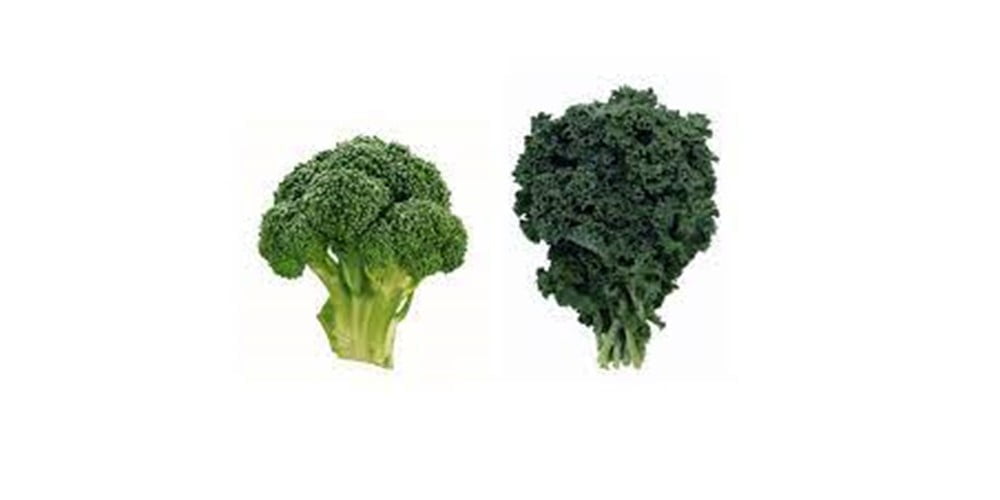
For the first time, a UK research group at the Institute of Food Research led by Professor Richard Mithen has provided an explanation of how eating broccoli might reduce cancer risk based upon studies in men, as opposed to trying to extrapolate from animal models.
Prostate cancer is the most common non-skin cancer for males in western countries.
The research has provided an insight into why eating broccoli can help men stay healthy.
For the study to be published in PLoS ONE on 2nd July, men who were at risk of developing prostate cancer ate either 400g of broccoli or 400g of peas per week in addition to their normal diet over 12 months.
Tissue samples were taken from their prostate gland before the start of the trial and after 6 and 12 months, and the expression of every gene measured using Affymetrix microarray technology.
It was found that there were more changes in gene expression in men who were on the broccoli-rich diet than on the pea diet, and these changes may be associated with the reduction in the risk of developing cancer, that has been reported in epidemiological studies.
Previous studies have suggested that the fifty percent of the population who have a GSTM1 gene gain more benefit from eating broccoli than those who lack this gene. The study showed that the presence of the GSTM1 gene had a profound effect on the changes in gene expression caused by eating broccoli.
This study fills the gap between observational studies and studies with cell and animal models. While observational studies have shown that diets rich in cruciferous vegetables may reduce the risk of prostate cancer and other chronic disease, they do not provide an explanation of how this occurs. Evidence from animal and cell models has sought to provide an explanation, but these studies are usually based on high doses that would not normally be experienced as part of the diet.
The results of the study suggested that relatively low amounts of cruciferous vegetables in the diet ? a few portions per week ? can have large effects on gene expression by changing cell signalling pathways. These signalling pathways are the routes by which information is transmitted through a molecular cascade which amplifies the signal to the nucleus of the cell where gene expression occurs.
The Norwich team are currently planning a larger study with men with localised prostate cancer, and will compare the activity of standard broccoli with the special variety of high glucosinolate broccoli used in the current study.
Source: Institute of Food Research, UK